Advice & Guides — March 2026 — 8 min read
☎️0800 019 7529Why Does My Conservatory Roof Develop Condensation and How to Prevent It
Discover the causes of conservatory roof condensation and explore practical solutions to prevent it for a more comfortable space.



Warranty
Guarantee
Free Conservatory Roof Consultation
We'll call you back within 2 hours
What Causes Condensation on Conservatory Roofs?
Condensation occurs when warm, moist air comes into contact with a cooler surface, causing the moisture in the air to turn into water droplets. In a conservatory, the roof is often the coolest surface, particularly during colder months. This makes it a prime location for condensation to form, especially if the roof lacks proper insulation or the room has poor ventilation. The presence of plants, drying laundry, or cooking in or near the conservatory can also increase humidity levels, exacerbating the problem.
Traditional polycarbonate or glass conservatory roofs are particularly susceptible to condensation due to their limited thermal efficiency. These materials struggle to regulate temperature effectively, leading to significant heat loss in winter and overheating in summer. As a result, the surface of the roof can become cold enough to create a condensation issue. Without addressing the root causes, this can lead to further complications such as mould growth, damp patches, and damage to furniture or flooring.
The Problems Caused by Conservatory Roof Condensation
Condensation in your conservatory can lead to several issues, ranging from minor inconveniences to serious problems that require costly repairs. One of the most common issues is mould growth, which thrives in damp environments. Mould not only looks unsightly but can also pose health risks, particularly for those with respiratory issues or allergies. Over time, persistent condensation can also lead to water damage, causing wood to rot, metal to corrode, and surfaces to stain.
Another significant problem is the impact on your conservatory's usability. Excess moisture can make the space feel damp and uncomfortable, discouraging you from using it as often as you might like. Furthermore, condensation can reduce visibility through glass walls and roofs, detracting from the aesthetic appeal of your conservatory. In the long term, these issues can lower the overall value of your property, making it crucial to address condensation promptly and effectively.
How to Prevent Condensation on Your Conservatory Roof
Preventing condensation in your conservatory starts with improving ventilation. Ensure that your conservatory is well-ventilated by opening windows or installing trickle vents to allow fresh air to circulate. This helps reduce humidity levels by removing excess moisture from the air. Using a dehumidifier can also be an effective way to manage humidity, particularly during the colder months when opening windows might not be practical.
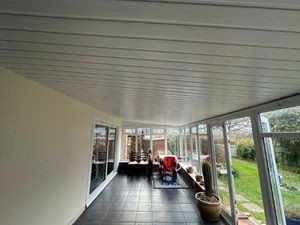
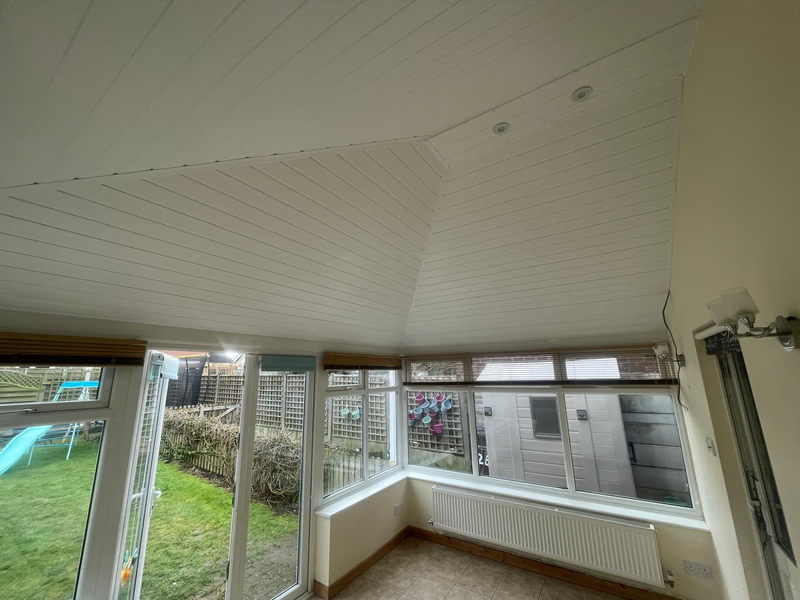
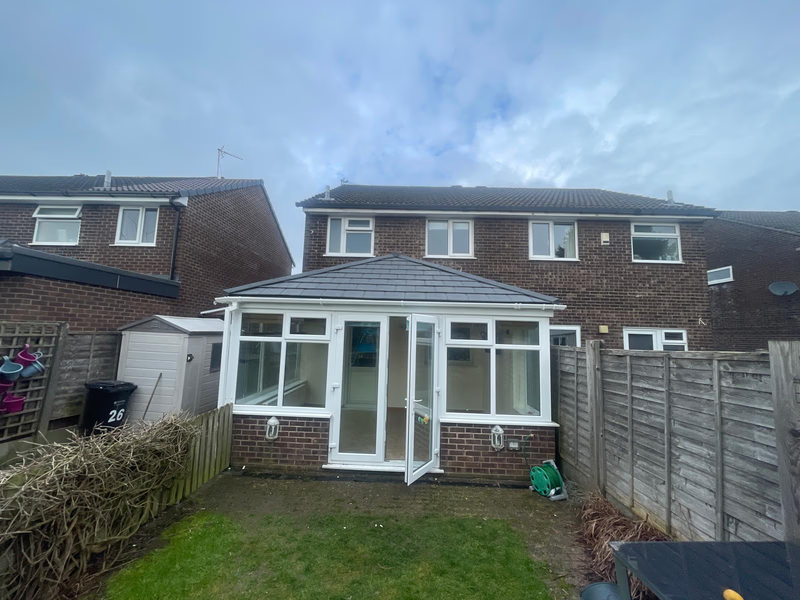
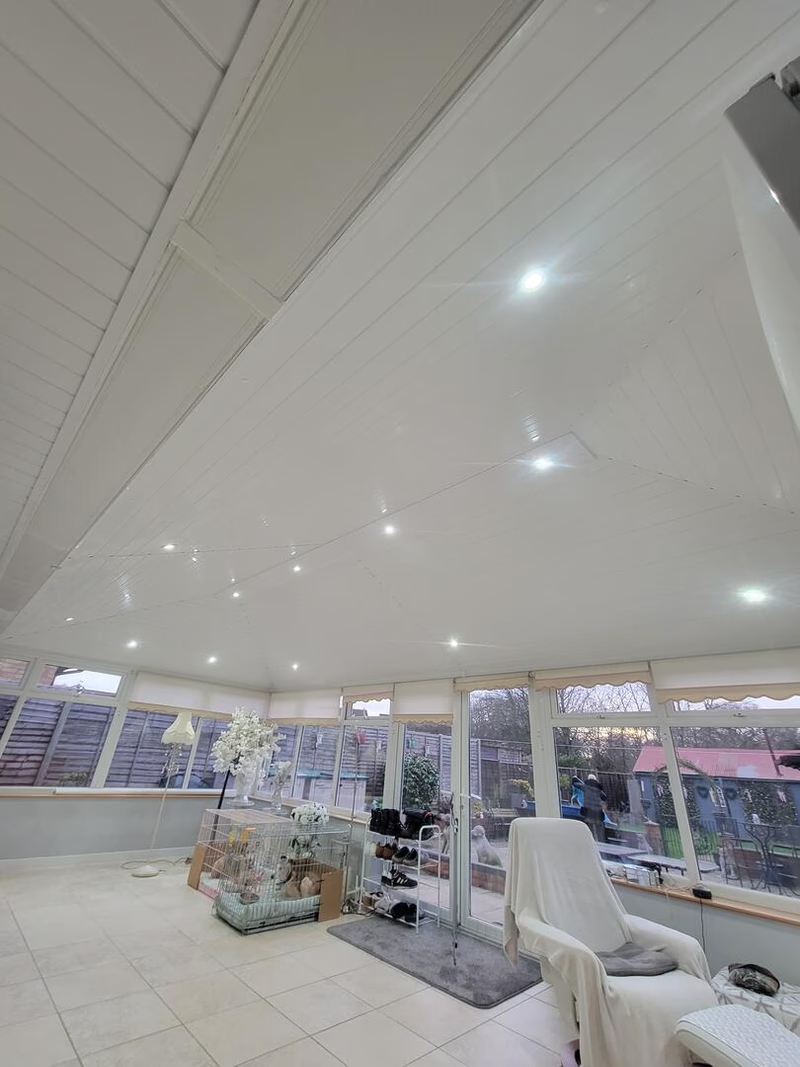
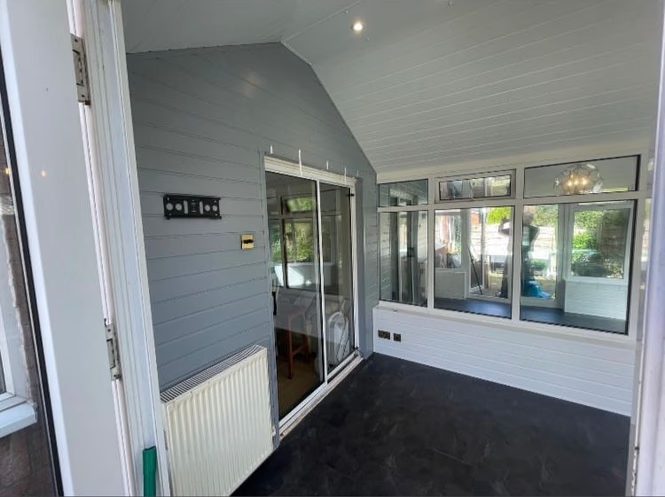
Another vital step is upgrading your conservatory roof to a more thermally efficient option, such as a tiled conservatory roof. Unlike traditional polycarbonate or glass roofs, our tiled conservatory roof system provides superior insulation, maintaining a more stable internal temperature. This drastically reduces the likelihood of condensation forming, as the roof surface remains warmer and less likely to attract moisture. Additionally, the white uPVC cladding we use for internal ceilings is resistant to damp, making it easier to clean and maintain over time.
- Ensure proper ventilation with open windows or trickle vents.
- Consider using a dehumidifier to manage moisture levels.
- Upgrade to a thermally efficient tiled conservatory roof for better insulation.
Additional Tips for Reducing Condensation
In addition to upgrading your roof and improving ventilation, there are other steps you can take to minimise condensation. For instance, avoid drying laundry in your conservatory, as this releases a significant amount of moisture into the air. If this is unavoidable, consider using a dehumidifier to counteract the effects. Similarly, keeping houseplants to a minimum can help reduce humidity levels, as plants naturally release moisture into the air through a process called transpiration.
Another tip is to ensure that your conservatory is properly heated during colder months. Maintaining a consistent indoor temperature can prevent the roof and walls from becoming too cold, which in turn reduces the chances of condensation forming. You can use energy-efficient heaters or underfloor heating to achieve this. Finally, consider insulating your conservatory walls and floors to further enhance its thermal performance, creating a more comfortable and moisture-free environment.
- Avoid drying laundry in your conservatory.
- Limit the number of houseplants to reduce humidity.
- Use energy-efficient heating to maintain a stable temperature.
- Insulate walls and floors to improve thermal performance.
Also see: Why Does My Conservatory Roof Develop Mould and How to Pr…
Also see: Why Does My Conservatory Roof Sag and How Can It Be Fixed?
Also see: Why Does My Conservatory Roof Creak in Hot Weather and Ho…
Also see: Why Does My Conservatory Roof Let in Draughts and How to…
Also see: Why Does My Conservatory Roof Feel Colder Than My Home?
Also see: Do You Need to Reinforce Your Conservatory Structure Befo…
Also see: Do I Need a Ventilated Conservatory Roof to Prevent Conde…
Also see: Do You Need a Load-Bearing Assessment Before Replacing a…
Get Your Free Quote Today
No obligation. No sales pressure. We'll call you within 2 hours and give you an honest, straight-talking price.
Call us free on
0800 019 7529
Mon–Fri 8am–6pm · Sat 9am–5pm

