The Short Answer
Polycarbonate roofs typically last 10–15 years before visibly degrading. Glass roofs can last 20–25 years before seals fail and panels cloud or crack. A well-installed tiled conservatory roof will last 40 years or more — roughly in line with a standard house roof. If your conservatory was built in the 1990s or early 2000s with the original polycarbonate, it is probably already past its prime.
| Material | Typical Lifespan | Common Failure Mode |
|---|
| Polycarbonate | 10–15 years | Yellowing, algae, cracking, leaks |
| Glass | 20–25 years | Seal failure, fogging, frame deterioration |
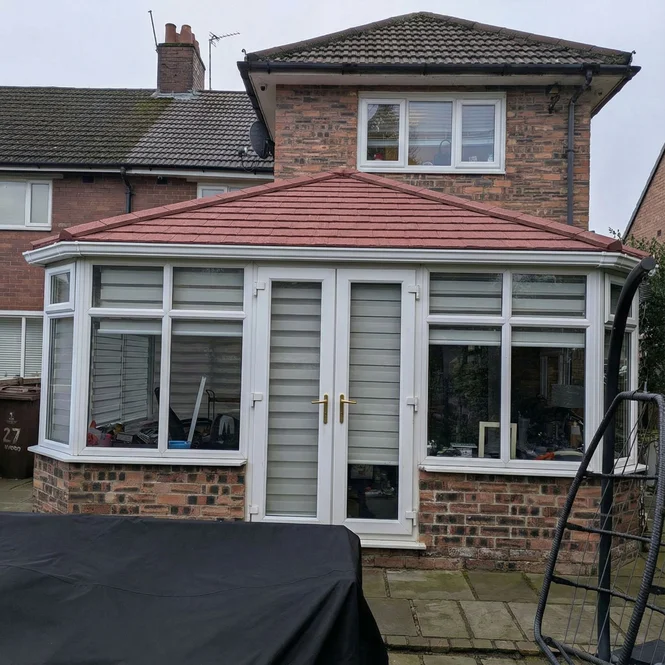
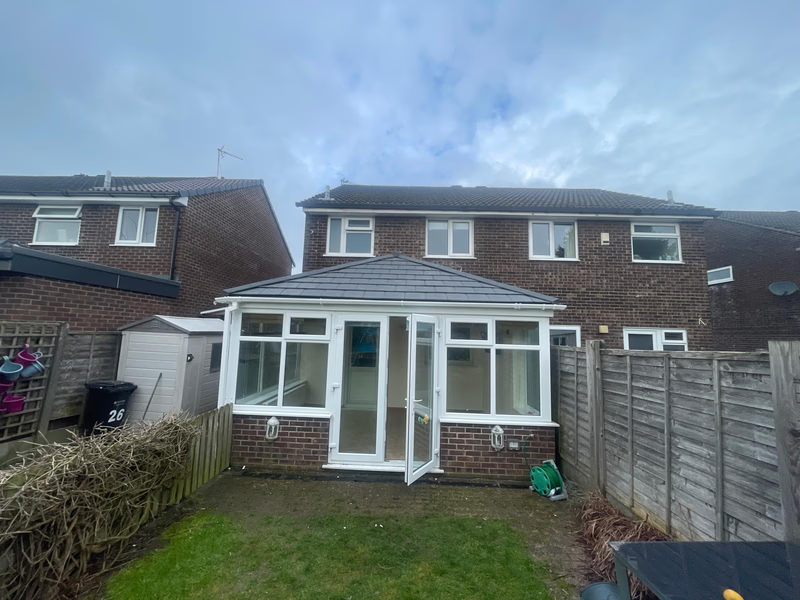
| Tiled (lightweight) | 40+ years | Individual tile damage rare and easily remedied |
Why Does Polycarbonate Degrade So Quickly?
Polycarbonate panels — the twin-wall or multi-wall sheets installed on most conservatories built before 2010 — degrade under UV exposure. The original UV-protective coating burns off gradually, leaving the plastic brittle and discoloured. Once this coating is gone, the material yellows and browns from the inside out, particularly in the flutes (the hollow channels in multi-wall sheeting) where moisture and algae become trapped.
You'll notice the signs long before the panel actually fails: a yellow tint to the natural light coming in, dark streaks or patches from algae growth inside the flutes (which can't be cleaned), and increasingly poor thermal performance as the cells fill with moisture. By the time panels start cracking or leaking, the roof has usually already been visually degraded for several years.
How Long Do Glass Conservatory Roofs Last?
Glass panels themselves are more durable than polycarbonate and don't discolour under UV. However, the seals and gaskets that hold roof glass in place degrade over time — particularly the silicone sealants at the bar-to-frame intersections and the rubber gaskets along the glazing bars. When seals fail, rain water enters between panes in double-glazed units, causing the unmistakable cloudy fogged appearance. Individual units can be replaced, but when this starts happening across multiple panels it usually indicates the entire system is reaching end of life.
The glazing bars and ridge/hip cappings also suffer from UV degradation over time, particularly on white UPVC systems, where they tend to chalk, crack, and lose their original colour. Most glass roof conservatories from the early 2000s are approaching or past the point where individual repairs become less economical than full replacement.
Signs Your Conservatory Roof Needs Replacing
- Yellowing or browning: polycarbonate is discolouring from UV damage — the coating is gone
- Dark streaks inside panels: algae growing inside the hollow flutes of polycarbonate — cannot be cleaned
- Fogged or cloudy glass: seal failure in double-glazed units — moisture between panes
- Leaks or drips: water entering around the ridge, hips, or glazing bars — sealant or bar end cap failure
- Excessive condensation: particularly if it wasn't present when the conservatory was new — indicates thermal failure
- Extreme temperature swings: unbearably hot in summer, cold in winter — the original panels are providing almost no insulation
- Cracked or broken panels: brittleness from UV degradation or impact damage
- Age over 15 years (polycarbonate): even if it looks acceptable, the thermal degradation will be significant
The Cost of Delaying
Leaving a failing roof in place has a real financial cost that is easy to overlook. A polycarbonate roof with degraded panels can have an effective U-value of over 3.0 W/m²K — meaning heat escapes the room roughly twenty times faster than through a tiled replacement. If you're heating a conservatory during autumn and winter, the ongoing energy cost of the poor thermal performance typically runs to several hundred pounds per year. Over a 5-year period, that can add up to more than the cost of the replacement itself.
There is also the risk of increasing water ingress. A slow drip from a degrading ridge seal can over time cause moisture damage to the supporting structure — wall plates, timber work, and in older conservatories the wall cavity itself. Addressing water damage during a roof replacement adds cost; addressing it after prolonged leakage can add significantly more.
How Long Do Our Tiled Roofs Come With a Guarantee?
Our full roof replacement system comes with a manufacturer's warranty on the tile system and a workmanship guarantee on the installation. The underlying structure, once inspected and confirmed as sound, supports a tile system that will require minimal maintenance — comparable to a standard house roof. Individual cracked tiles are simple to replace without disturbing the rest of the roof.
Time to Replace Your Roof?
If your conservatory is more than 10 years old and was built with polycarbonate, now is a good time to assess whether replacement makes sense. We offer free no-obligation surveys across our coverage area — we'll inspect your existing roof, confirm the frame condition, and give you a clear price within one working day. Call us on 0800 019 7529 or send us a message here.
Want to talk it through first?
☎️ 0800 019 7529Free advice, no sales pressure