Advice & Guides — March 2026 — 5 min read
☎️0800 019 7529Polycarbonate vs Tiled Conservatory Roof: Which is Better?
If you're tired of a conservatory that's boiling in summer and freezing in winter, the roof is almost certainly the cause. Here's an honest, direct comparison of polycarbonate and tiled roofs.



Warranty
Guarantee
Free Conservatory Roof Consultation
We'll call you back within 2 hours
The Problem with Polycarbonate
Polycarbonate was the affordable solution of the 1990s and 2000s, and millions of conservatories were built with it. The problem is that it performs poorly as an insulating material:
- Too hot in summer — polycarbonate creates a greenhouse effect, trapping solar heat and making rooms unbearably warm
- Too cold in winter — it provides almost no thermal insulation, so heat escapes rapidly on cold days
- Very noisy in rain — even light rain on polycarbonate is distracting and makes conversation difficult
- Yellows and degrades over time — UV exposure causes discolouration and brittleness within 10–15 years
- High U-value — a typical polycarbonate roof has a U-value of 1.8 W/m²K or higher, meaning poor energy efficiency


What About Glass Roofs?
Modern double-glazed or triple-glazed glass roofs are a significant improvement on polycarbonate. They're clearer and brighter, reduce noise, and can include solar control coatings. However, even a high-specification glass conservatory roof typically achieves a U-value of around 1.0–1.2 W/m²K — still far behind a tiled system. Glass also loses heat through conduction quickly once temperatures drop.
Why a Tiled Roof Wins on Every Metric
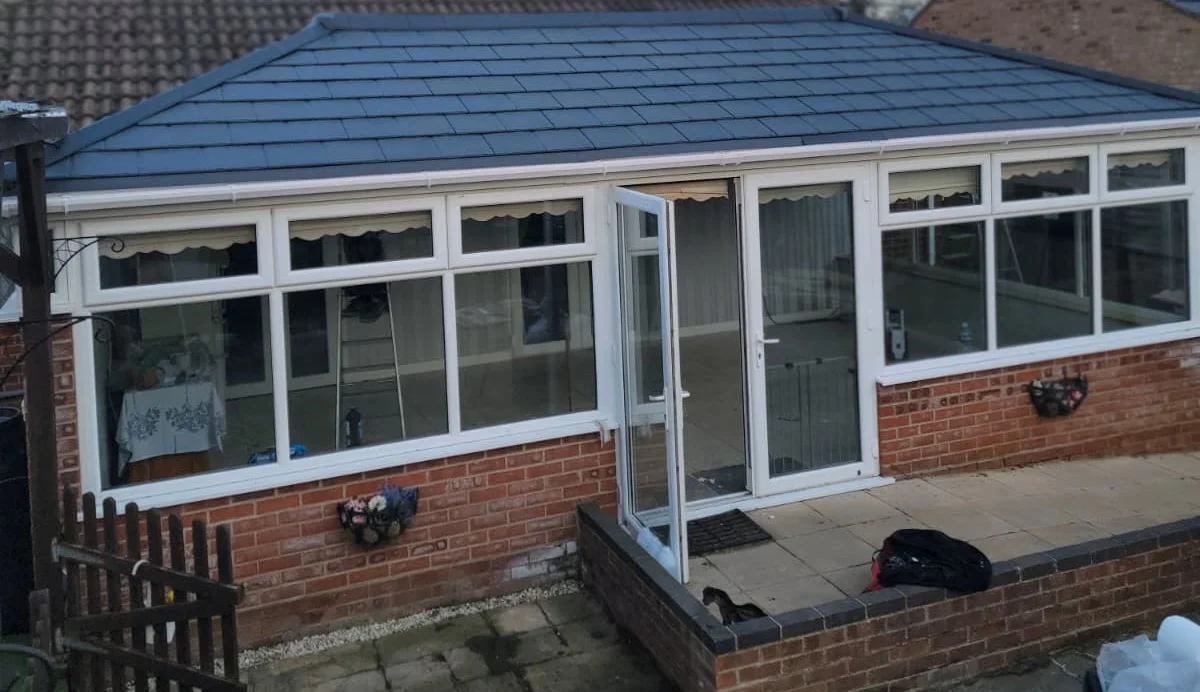
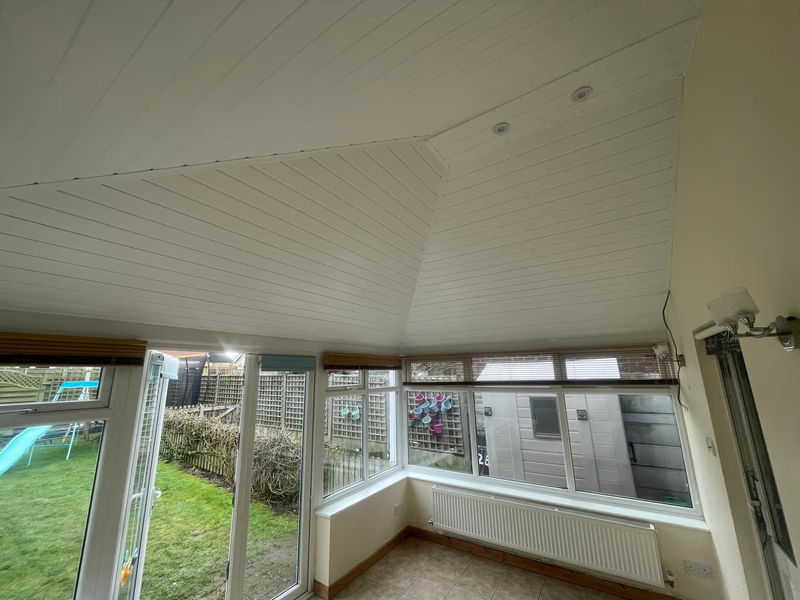
A properly installed tiled conservatory roof with insulated rafters and a boarded or cladded ceiling transforms a conservatory into a genuine room:
- Excellent insulation — our Eco Friendly tile systems achieve U-values as low as 0.15 W/m²K, compared to 1.8–3.0 W/m²K for polycarbonate — meaning heat stays in the room rather than escaping through the ceiling
- Cool in summer — solid insulation eliminates the greenhouse effect entirely
- Silent in rain — a boarded ceiling absorbs and deadens sound completely
- No degradation — quality tiles last 40+ years with virtually no maintenance
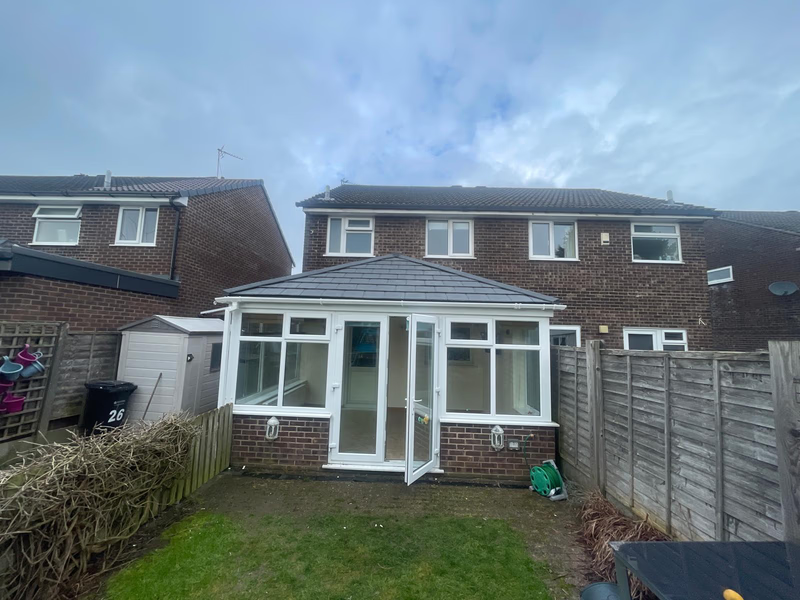
- Looks like part of the house — a tiled roof matches your main roof and dramatically improves kerb appeal
- Adds property value — estate agents treat an insulated conservatory as living space; polycarbonate ones are often discounted
| Feature | Polycarbonate | Tiled Roof |
|---|---|---|
| Insulation (U-value) | 1.8 W/m²K | 0.15 W/m²K |
| Heat loss in winter | Very high (1.8 W/m²K) | Very low (0.15 W/m²K) |
| Summer comfort | Greenhouse effect | Cool & comfortable |
| Rain noise | Very loud | Silent |
| Lifespan | 10–15 years | 40+ years |
| Property value | Neutral / negative | Positive |
Does a Tiled Roof Let in Less Light?
This is a common concern. The honest answer is yes — a solid tiled roof does not let in light from above. However, the difference in practice is less noticeable than most people expect. Conservatories have large windows on all sides, and many customers tell us the room actually feels brighter after the replacement because light is no longer blinding or washed out. You can also add roof lanterns or Velux windows if you want to bring in additional natural light from above.
How Much More Does a Tiled Roof Cost?
A polycarbonate replacement cost varies, but as a rough guide a tiled roof replacement typically starts from £1,495 with CRS. Once you factor in long-term energy savings and longevity, this upgrade to your conservatory is very cost effective. Read our full cost guide here.
Our Verdict
If you are choosing between replacing a polycarbonate roof with another polycarbonate or glass roof, we would always recommend a tiled system unless you specifically need the light from above. The thermal performance difference is significant, the room becomes genuinely usable all year round, and the investment is recouped through energy savings and property value. Get a free quote and we'll give you an honest, no-pressure assessment for your specific conservatory.
Also see: Do I Need to Reinforce My Conservatory Structure for a Ti…
Get Your Free Quote Today
No obligation. No sales pressure. We'll call you within 2 hours and give you an honest, straight-talking price.
Call us free on
0800 019 7529
Mon–Fri 8am–6pm · Sat 9am–5pm

