Why Conservatories Get So Hot
A polycarbonate or glass conservatory behaves exactly like a greenhouse. Sunlight passes through the transparent roof and warms everything inside — furniture, flooring, air. That heat then has nowhere to go. The surface of the roof radiates further heat downward into the room, and most conservatories have very little ventilation to compensate. By mid-morning on a warm July day, temperatures can easily exceed 40°C — far hotter than outside.
The harder truth: no amount of temporary fixes will solve this properly. Blinds help slightly, fans move hot air around, air conditioning units are expensive to install and run. Only changing the roof itself — the source of the problem — delivers a genuine, permanent solution.
Temporary Measures: What Helps a Little
If you're not yet ready for a full roof replacement, these measures can take the edge off:
- Roof blinds — internal or external roof blinds reduce direct solar radiation entering through the panels, but cannot address radiant heat from the panels themselves once they warm up
- Roof vents and windows — if you have opening roof panels, using them creates airflow, which helps on breezy days but offers little relief during still, humid weather
- Solar control film — applied to glass or polycarbonate panels, these tinted films reduce heat gain slightly and cut glare; some homeowners find them worthwhile but results vary considerably
- Electric fans or portable air conditioning — move cooled air around the room but consume significant electricity and do nothing about the source heat load
- White or reflective blinds — reflect more sunlight back out through the roof rather than absorbing it; more effective than darker-coloured blinds
The Permanent Solution: A Tiled Roof
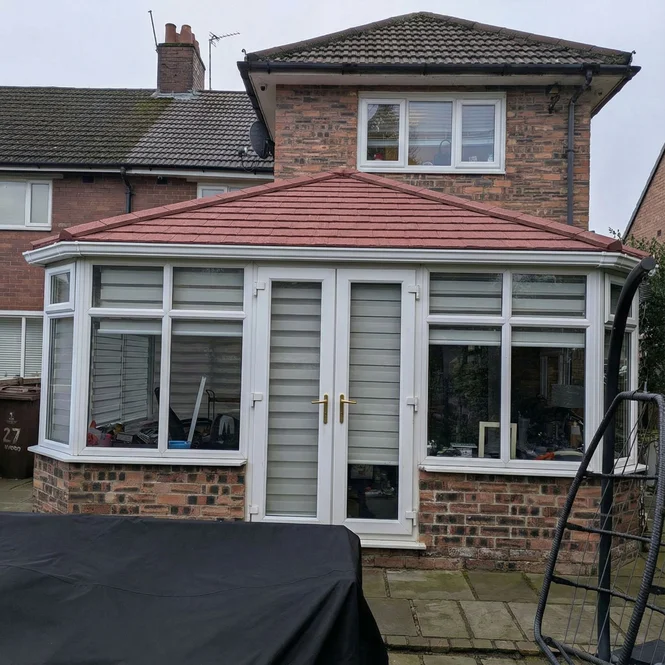
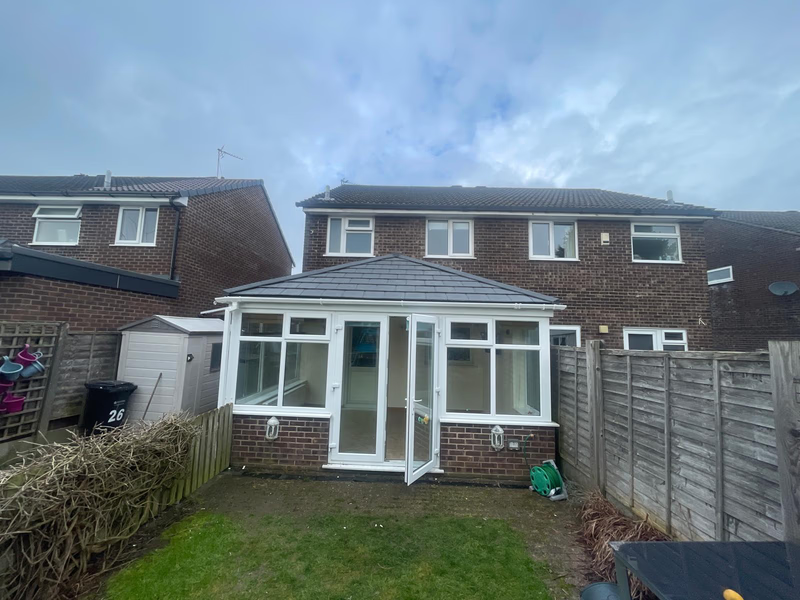
The single most effective way to keep a conservatory cool in summer is to replace the polycarbonate or glass roof with a fully insulated tiled system. Here's why it works when everything else doesn't:
- Eliminates the greenhouse effect entirely — solid insulated panels simply cannot transmit solar radiation in the way glass and polycarbonate do
- Reflects heat away from the building — quality roof tiles reflect solar energy rather than absorbing and re-radiating it downward
- Creates a thermal barrier — the multi-layer insulation system blocks heat transfer in both directions, preventing the room from heating up even in direct sun
- Dramatically reduces the cooling load — if you do choose to run air conditioning, a tiled roof means the room reaches temperature much faster and stays cool with far less energy
| Solution | Effectiveness | Permanence |
|---|
| Roof blinds | Low–moderate | Temporary |
| Fans / portable AC | Low | Temporary |
| Solar control film | Low–moderate | Fades over time |
| Tiled insulated roof | Very high | Permanent — 40+ years |
What Temperature Difference Can I Expect?
Customers consistently report a dramatic difference after a roof replacement. A polycarbonate conservatory that was reaching 42–45°C on a warm day becomes a room that tracks the ambient outdoor temperature rather than exceeding it — because there’s no longer a transparent roof transmitting solar radiation directly into the space. The room becomes genuinely comfortable regardless of the weather outside, without any air conditioning.
Will I Lose Natural Light?
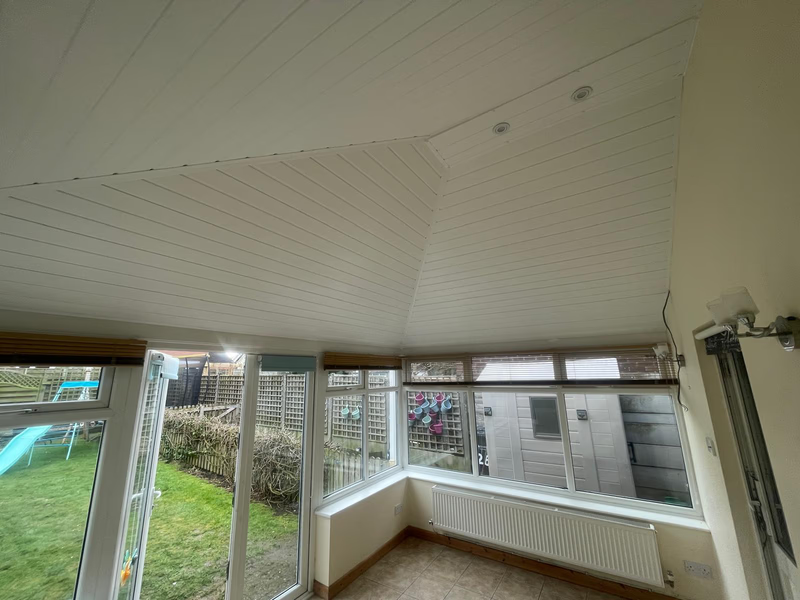
This is the most common concern, and it's understandable. The honest answer is that a solid roof does reduce overhead daylight. However, the practical experience is more nuanced: conservatories have glass on all four walls, and the overhead light from polycarbonate is often described as harsh, glaring, and uncomfortable rather than pleasant. Many customers tell us the room feels better-lit after a tiled roof because the remaining light (from the walls) is softer and more even. If you particularly want daylight from above, we can incorporate Velux-style roof windows or a lantern feature into the design.
How Much Does a Tiled Roof Cost?
Our tiled roof systems start from £1,495 for a standard lean-to. Most customers pay between £2,500 and £6,000 depending on size and style. Given the improvement in comfort, energy savings, and property value, most homeowners wish they'd done it sooner. Read our full cost guide or get a free, no-obligation quote and we'll give you an accurate figure for your specific conservatory the same day.
Want to talk it through first?
☎️ 0800 019 7529Free advice, no sales pressure